
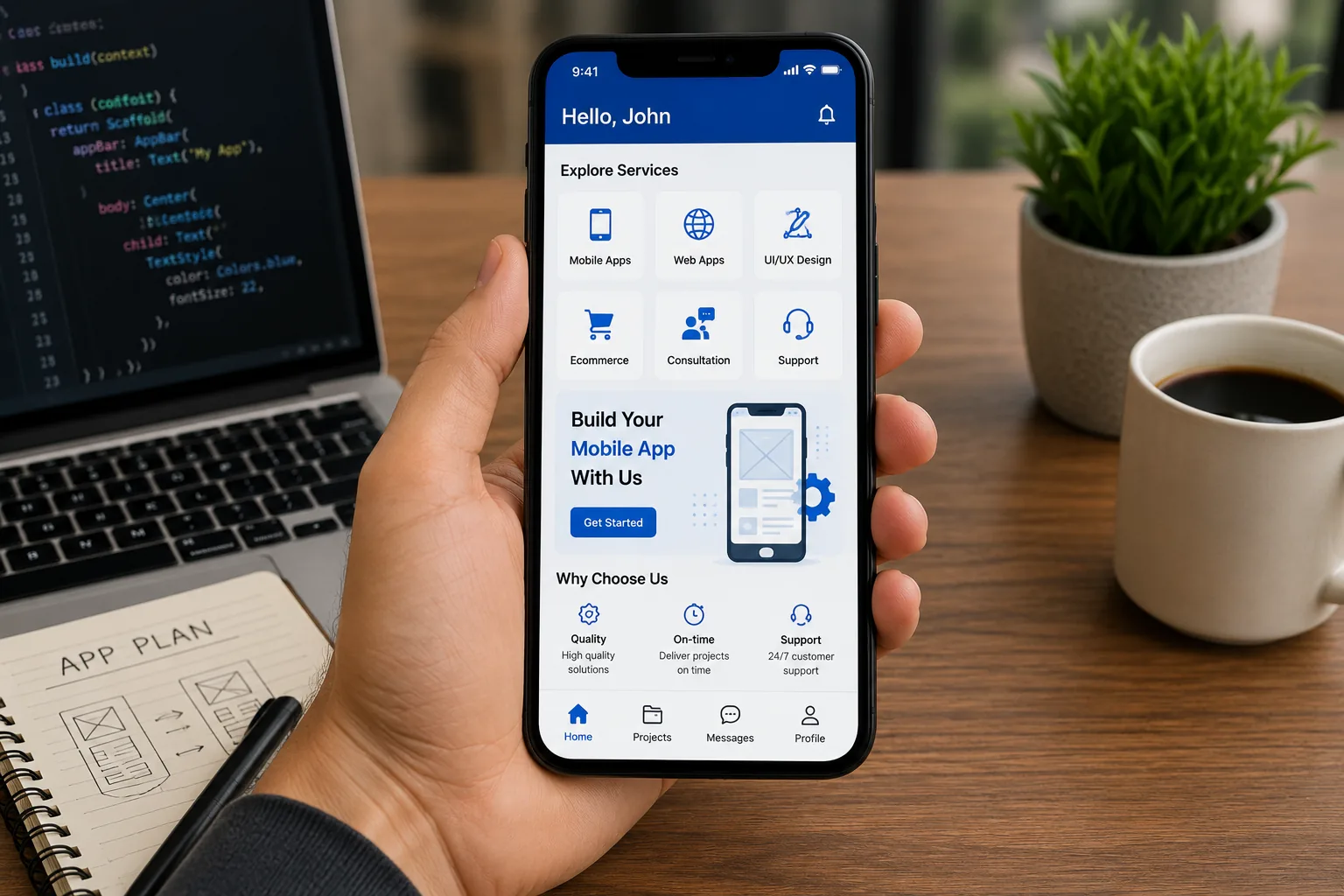
Mobile applications have become an important part of many businesses. From online shopping and food delivery to appointments and customer support, an app can make everyday interactions more convenient.
However, building an app simply because competitors have one is not always the right reason. Before development starts, a business should understand what problem the app will solve and who will actually use it.
1. Define the Purpose of the App
Start by identifying the main reason for building the app. Maybe customers need an easier way to place orders, book appointments, track services or access their accounts.
Having a clear purpose helps the development team decide which features are actually necessary and which ones can be left for later.
2. Decide Which Features You Really Need
It is easy to keep adding features during the planning stage. The result can be a complicated application that takes longer to build and becomes difficult for users to understand.
Begin with the features that directly support the main purpose of the app. Additional features can be introduced after the first version has been tested with real users.
3. Choose the Right Platform
Businesses usually need to consider Android, iOS or both. Android can be important when reaching a wider range of smartphone users, while iOS may be important for businesses targeting Apple users.
The right choice depends on the target audience, budget, location and business requirements. Cross-platform technologies can also be considered when a business wants to develop for multiple platforms from a shared codebase.
4. Keep the User Experience Simple
An app should not make users think about where to tap next. Important actions should be easy to find and the overall navigation should feel natural.
Clear screens, readable text, familiar interface patterns and simple navigation can make a big difference to the overall experience.
5. Pay Attention to App Performance
Users expect apps to respond quickly. Slow screens, unnecessary loading and frequent crashes can make people stop using an app.
Performance should therefore be considered during development. Efficient code, optimized images, proper API handling and suitable testing can help keep the application responsive.
6. Plan for Security
Mobile applications may handle customer accounts, contact details, payments or other business information. Security should be considered from the beginning rather than added at the end.
Secure authentication, protected APIs, safe data handling and regular updates are important parts of maintaining a reliable application.
7. Test Before Launch
An app can work perfectly on one device and still have problems on another. Testing should cover different screen sizes, operating systems and common user actions.
Real users can also reveal problems that developers may not notice during normal testing. Fixing these issues before launch can provide a much better first experience.
Common App Development Mistakes
- Building an app without a clear purpose
- Adding too many features in the first version
- Ignoring the target audience
- Making navigation unnecessarily complicated
- Ignoring app performance
- Leaving security until the end
- Not testing on different devices
- Forgetting about future maintenance
Final Thoughts
Good app development starts with understanding the business and its customers. The technology matters, but it should support the actual purpose of the application rather than become the focus by itself.
Plan the core features, understand your users, keep the interface simple and test the application properly before launch. This gives the app a much stronger foundation for future improvements.