
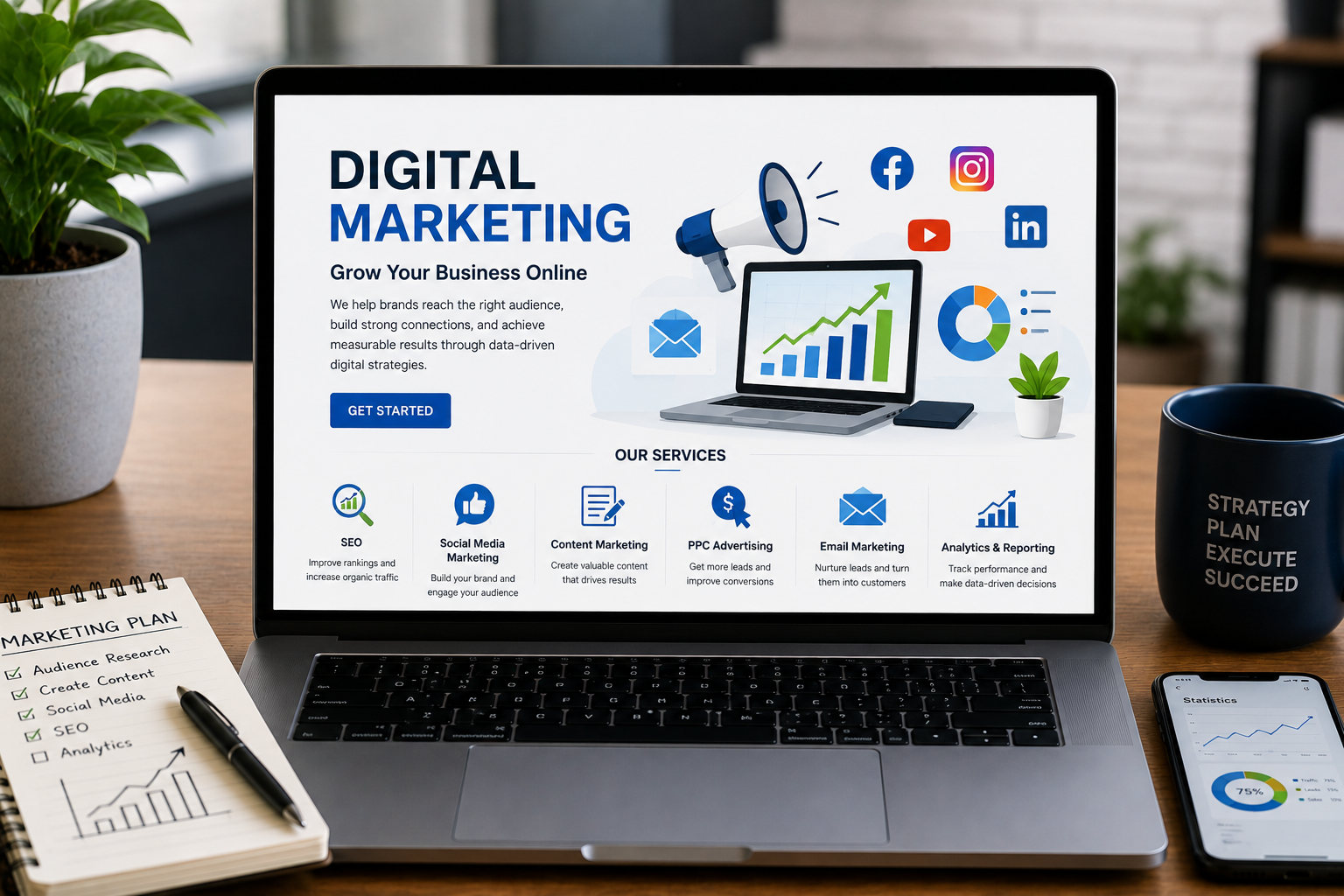
Customers often search online before choosing a business. They may check Google, visit a website, look at social media or read reviews before making a decision.
Digital marketing helps a business become easier to find in these places. But it does not mean using every marketing channel at the same time. The better approach is to start with the channels that match your customers and business goals.
1. Start With a Clear Goal
Before spending money on advertising or creating dozens of social media posts, decide what you want to achieve.
Your goal could be getting more enquiries, increasing website visits, generating online sales, improving local visibility or building awareness for a new business.
2. Understand Your Target Audience
Good marketing starts with knowing who you are trying to reach. Think about the people most likely to need your product or service and what information they look for before making a decision.
Understanding their questions, problems and buying habits can help you create more useful content and choose better marketing channels.
3. Build a Strong SEO Foundation
Search engine optimization can help your website appear when people search for relevant products or services.
Start with useful service pages, clear page titles, relevant content, good internal linking and a website that works well on mobile devices. For local businesses, location information and a well-maintained Google Business Profile can also be important parts of the strategy.
4. Use Social Media With a Purpose
Social media can help businesses stay connected with existing customers and introduce their services to new audiences.
Instead of posting just to stay active, share content that gives people a reason to follow your business. Helpful tips, product information, project updates, customer questions and behind-the-scenes content can make a page more useful.
5. Create Content People Actually Need
Content marketing works best when it answers real questions. A blog article, guide, short video or social media post can explain something that customers commonly want to know.
For example, a web development company could publish an article explaining what businesses should check before launching a new website. That content can attract people who are already researching the service.
6. Consider Paid Advertising
SEO and organic social media can take time. Paid advertising can help businesses reach a specific audience more quickly.
Google Ads and social media advertising can be useful when they are connected to a clear offer and a suitable landing page. Start with a realistic budget and measure the results instead of increasing spending without knowing what is working.
7. Measure What Is Working
Marketing decisions should not be based only on likes or impressions. Look at the actions that matter to your business.
Depending on your goal, this could include enquiries, phone calls, website visits, purchases, form submissions or qualified leads.
Common Digital Marketing Mistakes
- Trying every marketing channel at once
- Posting content without a clear purpose
- Ignoring the target audience
- Focusing only on follower counts
- Running ads without a clear landing page
- Ignoring SEO for the business website
- Not tracking enquiries or conversions
- Expecting immediate results from every strategy
Final Thoughts
Digital marketing becomes easier to manage when a business starts with a clear goal and focuses on the channels its customers actually use.
Build a useful website, create helpful content, maintain your online presence and measure the results. Over time, these consistent efforts can create a stronger digital presence for your business.